
Helping leaders build businesses where customer value earns loyalty and loyalty delivers profitable, sustainable growth
Companies that lead their industry in NPS outperform peers 2–5x in total shareholder returns
Creator of the Net Promoter System.
Co-author of The Ultimate Question 2.0.
Faculty member at Harvard Business School.Host of the Customer Confidential podcast.
Trusted advisor to CEOs, boards, and leadership teams worldwide.
ABOUT ROB MARKEY
I help leaders design businesses where delivering real value
earns customer loyalty, and where loyalty delivers profitable, sustainable growth.

Click to visit Rob’s bio at Bain.com
I help leaders build the systems that create and sustain a customer-centric culture and strategy. I didn’t set out to become an expert on customer loyalty. But three early career experiences set me on that path.
I learned from my grandfather’s small business how loyalty built on trust can create lasting advantage. I saw at LEXIS/NEXIS how competitors who invested in customer relationships reshaped market share. I witnessed firsthand how my clients’ corporate systems that ignored customer value could erode it, even when each individual team met their internal targets.
My mission: Make customer value the currency of business success.
That is why I am devoted to helping CEOs, boards, and leadership teams redesign their organizations to build and sustain customer value. I help them:
Learn how to design their products, services, and operations around the customers they can most successfully serve
Measure and manage the value they deliver, the customer relationship health that results, and the value they earn in return
Ensure they set and keep their organization on a path to sustainable, profitable, organic growth
Foster an energetic, enthusiastic, and creative workforce inspired by a customer-focused purpose
I help companies create true value so they earn fervent customer advocacy, energetic employee engagement, and enthusiastic investor support.
I am the creator of the Net Promoter System, co-author of The Ultimate Question 2.0, and a longtime Bain partner who founded and led the global Customer Strategy practice. I now teach at Harvard Business School, serve on several nonprofit and corporate boards, and host the Customer Confidential podcast, where I explore how leaders build customer‑centric businesses. I also work with leaders to help them develop more customer-centric cultures and earn profitable, sustainable growth.


COACHING, SPEAKING, WORKSHOPS, CONSULTING
Keynote at International Summit of Cooperatives held in Quebec
(8,000 in audience)
Rob inspires and coaches senior executives and leadership teams that want to create customer-centric organizations.
Request a speech, workshop, or project. We will plan your event or project with care, customizing the content and the level of interactive discussion to your audience and organizational needs. Rob has delivered over 250 keynote speeches at events ranging from 50 to 10,000 people. He has led hundreds of highly-impactful executive workshops. Rob engages deeply and personally to make sure your event is a huge success.
(We'll get back to you as soon as we can. Sometimes it takes a few days.)
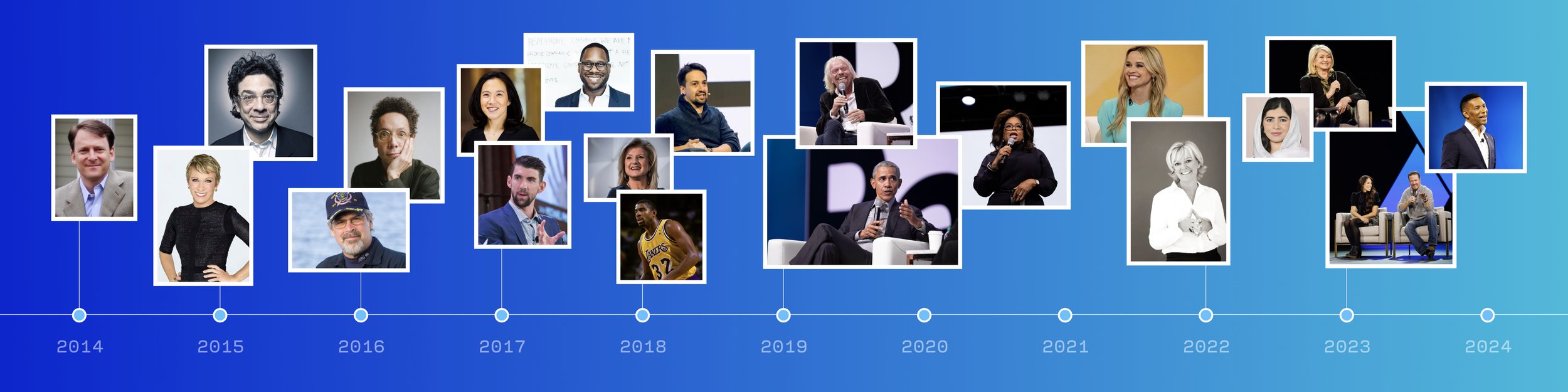
Rob’s appearances include keynotes at the Qualtrics X4 conference since 2014 alongside other famous speakers (roughly 10,000 attendees)
Photo credit: Qualtrics
PUBLICATIONS
BOOKS
The Ultimate Question 2.0: How Net Promoter Companies Thrive in a Customer-Driven World (Harvard Business Review Press, 2011), with Fred Reichheld
ARTICLES
“Are You Undervaluing Your Customers?” Harvard Business Review, January-February 2020
“Closing the Customer Feedback Loop” Harvard Business Review, December 2009
Loyalty Insights Series, Bain & Company, 2007-present
“Make it Easier for Happy Customers to Buy More” Harvard Business Review, October 19, 2016
“Run B2B Sales on Data, Not Hunches” Harvard Business Review, September 12, 2016
“The Four Secrets to Employee Engagement” Harvard Business Review, January 27, 2014
“Leading by Letting Go” Harvard Business Review, December 25, 2013
“Five Ways to Learn Nothing from Your Customers’ Feedback” Harvard Business Review, December 9, 2013
“Find Your Sweet Spot” Harvard Management Update, February 27, 2008

Click to open in a new tab
CUSTOMER CONFIDENTIAL
Notable episodes
EARNED GROWTH: MEASURING AND MANAGING CUSTOMER VALUE
LEADERSHIP
MOTIVATION, INCENTIVES, EXPERTISE
THE CUSTOMER-CENTRIC (AGILE) OPERATING MODEL
ROB MARKEY IN THE NEWS

Fortune,
May 18, 2020
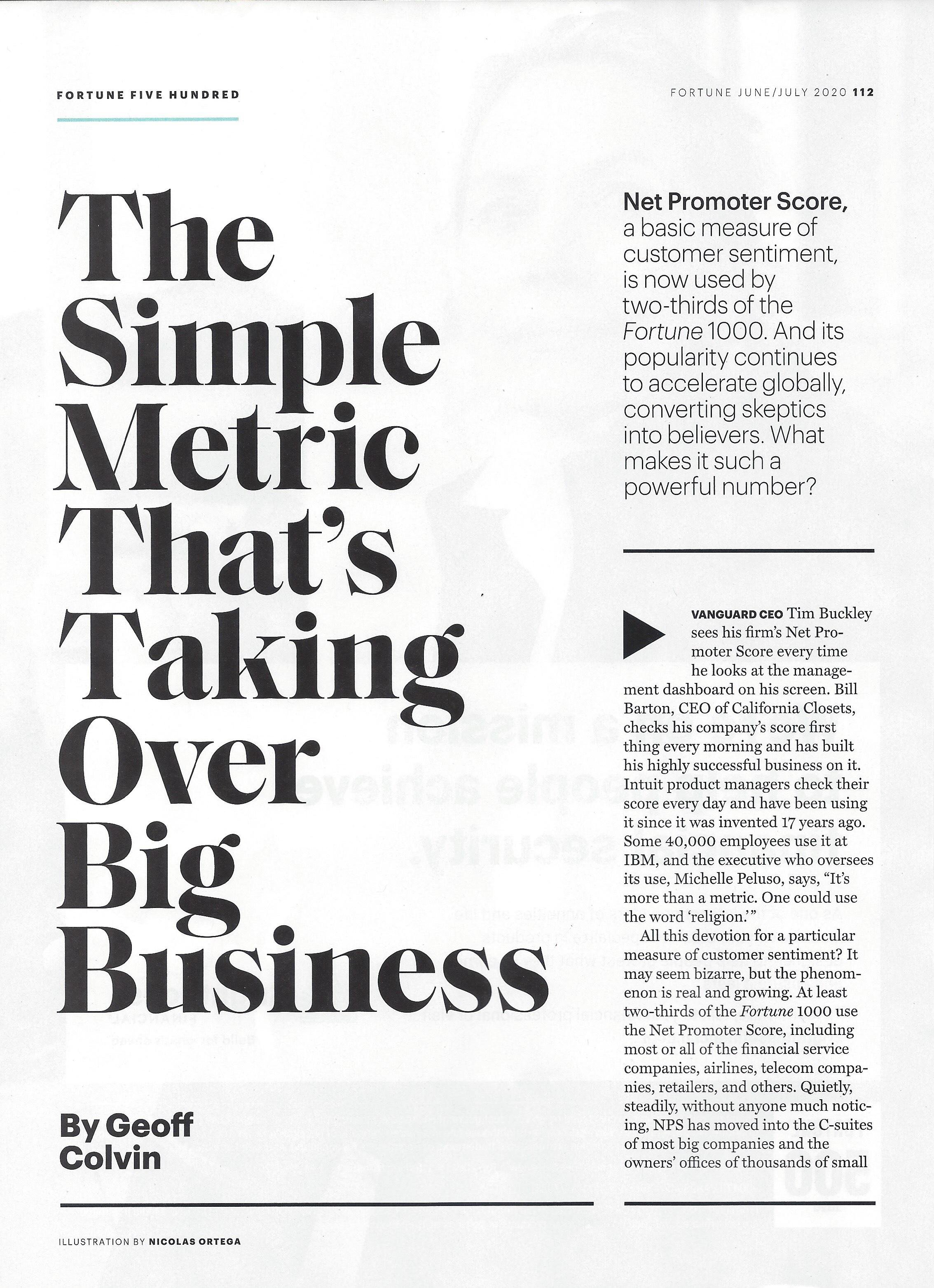
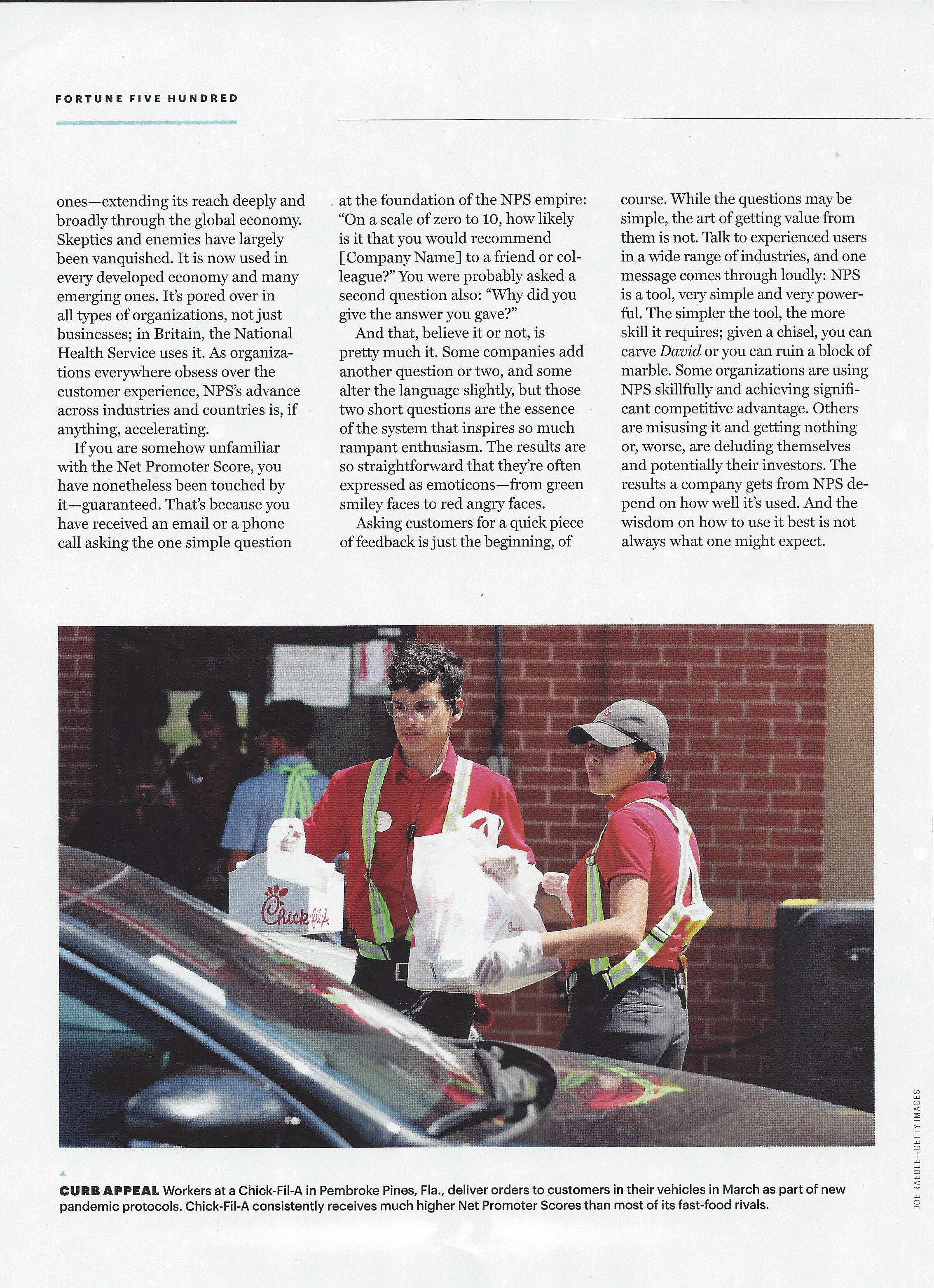
The Simple Metric That’s Taking Over Big Business, by Geoff Colvin
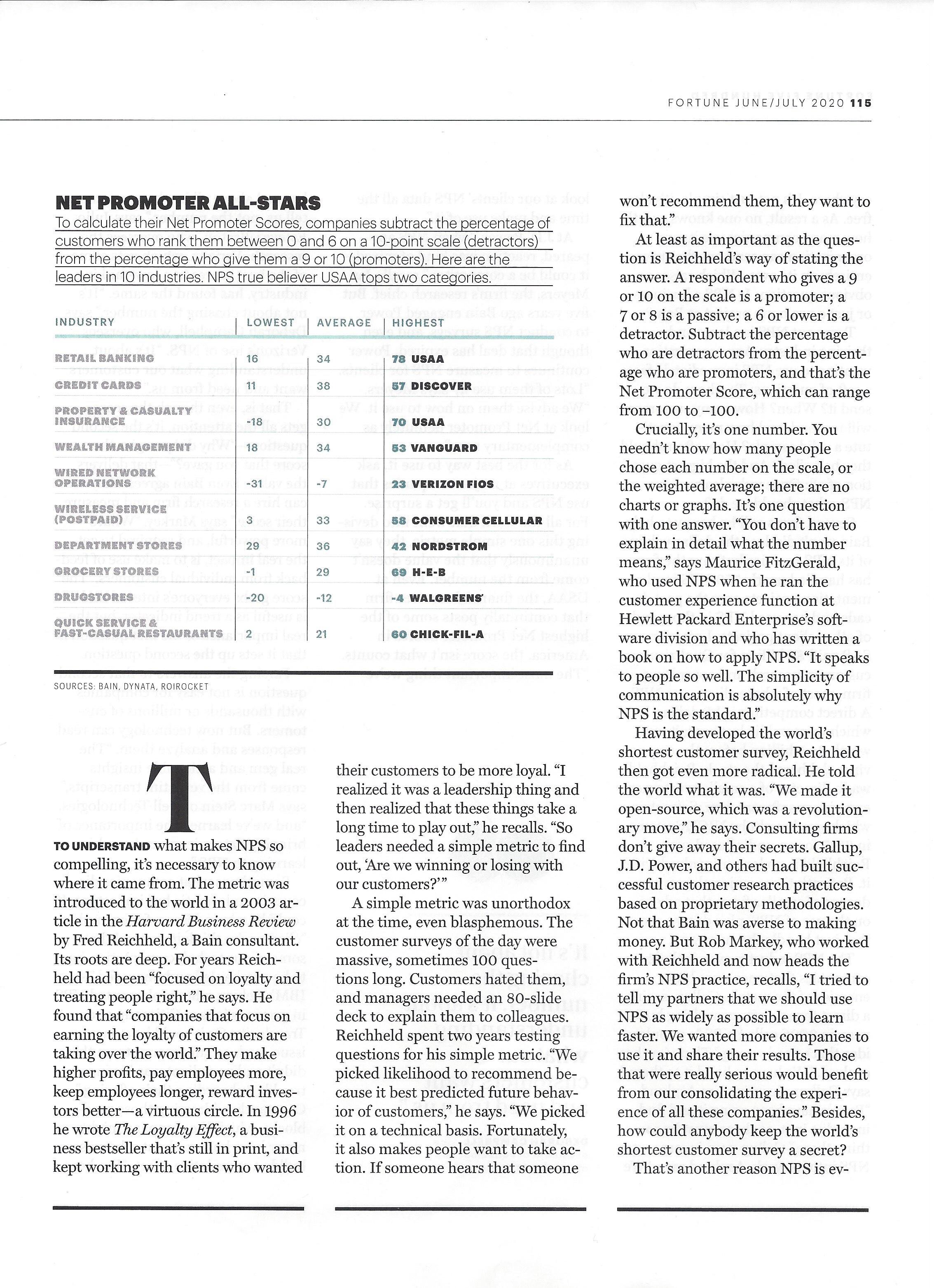
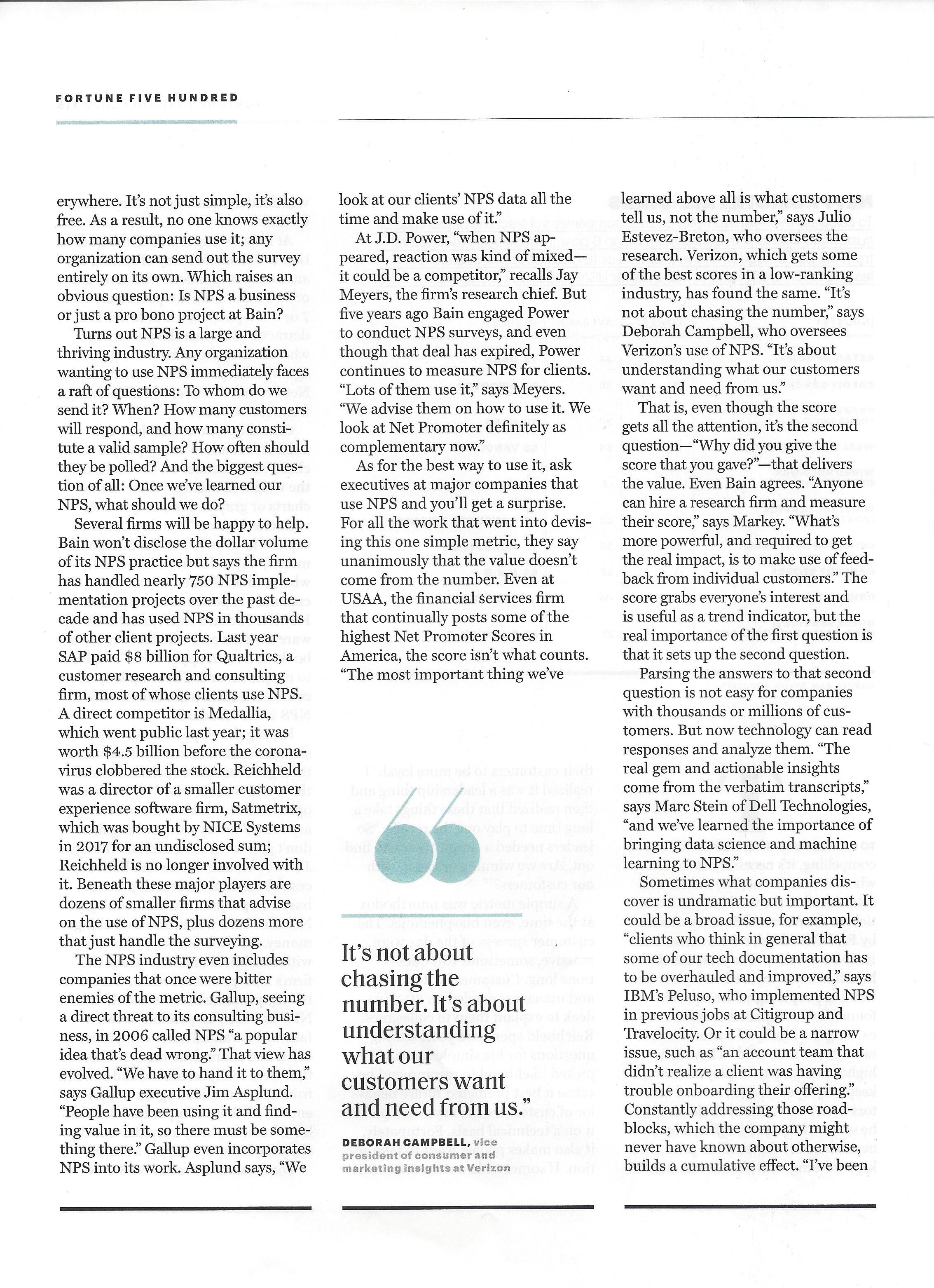
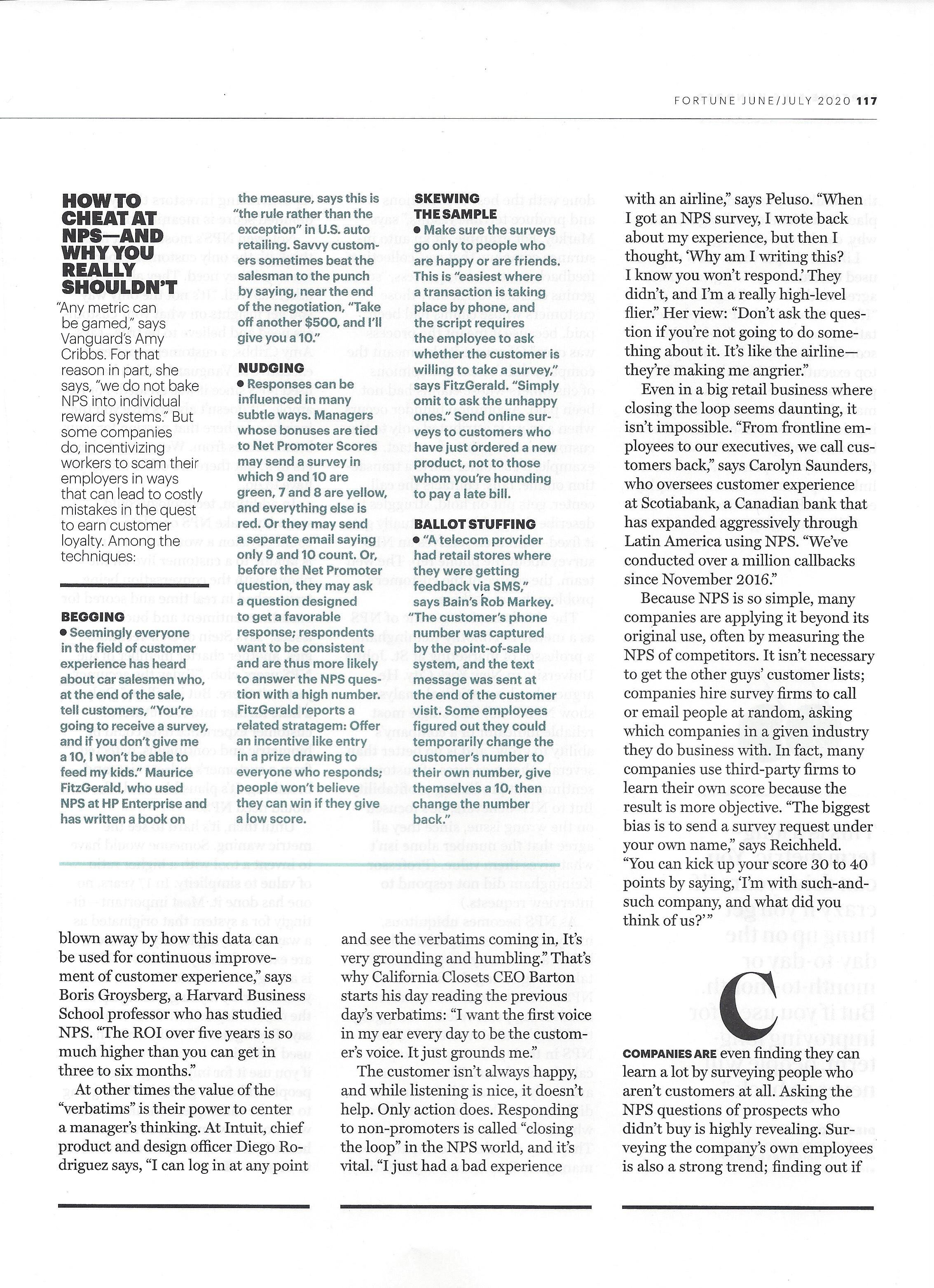
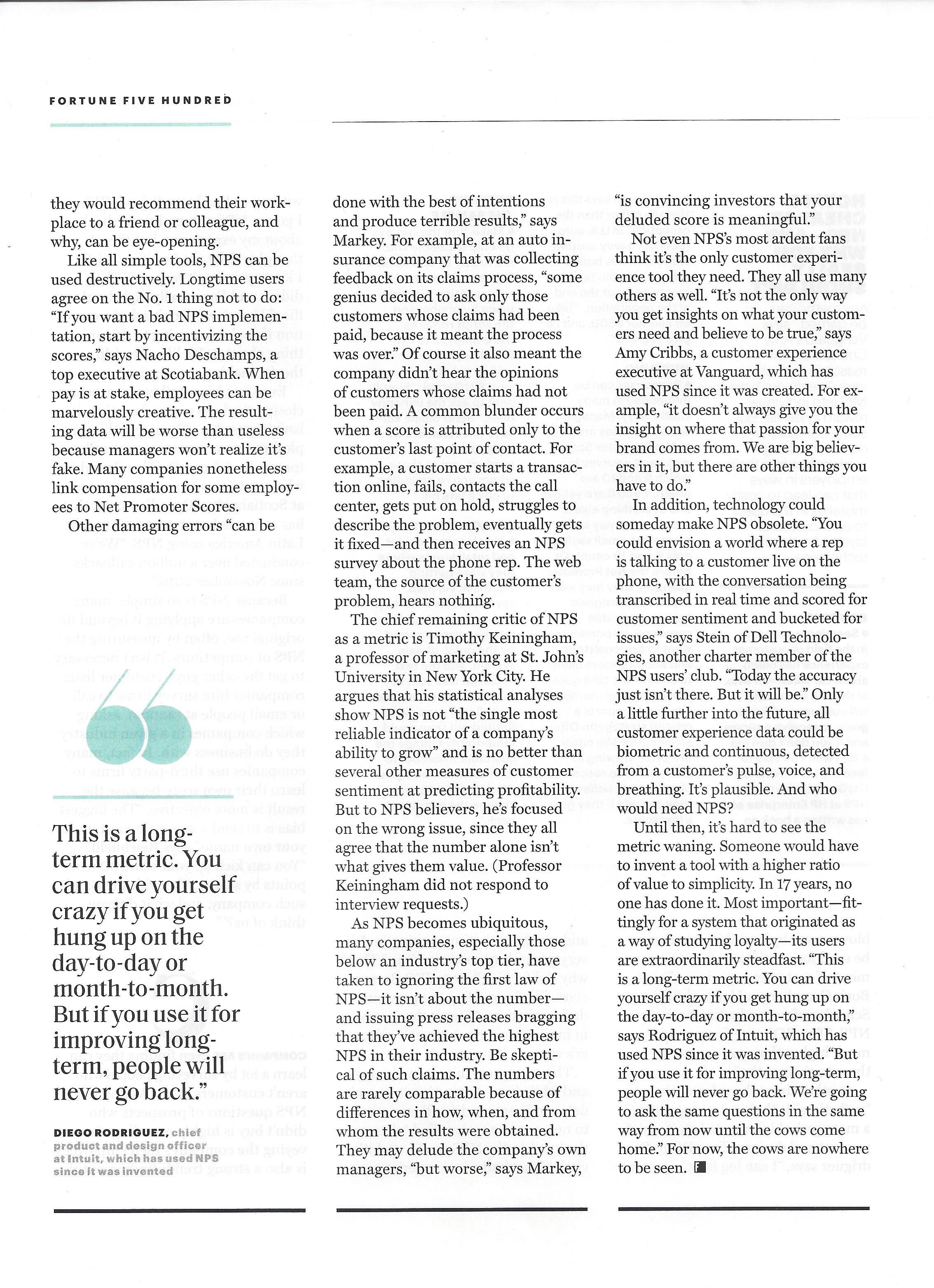
Having developed the world’s shortest customer survey, Reichheld then got even more radical. He told the world what it was. “We made it open-source, which was a revolutionary move,” he says. Consulting firms don’t give away their secrets. Gallup, J.D. Power, and others had built successful customer research practices based on proprietary methodologies. Not that Bain was averse to making money. But Rob Markey, who worked with Reichheld and now heads the firm’s NPS practice, recalls, “I tried to tell my partners that we should use NPS as widely as possible to learn faster. We wanted more companies to use it and share their results. Those that were really serious would benefit from our consolidating the experience of all these companies.” Besides, how could anybody keep the world’s shortest customer survey a secret?


On Brand,
April 27, 2020
“In times of crisis, as leaders, we often want to clamp down—command and control. We go into bunker mode.” However, customer loyalty is best built by closing the distance between a brand’s leadership and the front lines of employees and customers, explains Rob Markey of Bain & Company. We discussed all of this and more on this week’s episode of the On Brand podcast.

Follow Your Different,
March 30, 2020
We speak with Rob Markey of Bain & Co today about his breakthrough piece for Harvard Business Review “Are You Undervaluing Your Customers?”Rob also leads the Net Promoter Score Loyalty Forum and his Firm, Bain, invented the Net Promoter Score (NPS). We have a riveting conversation about why companies with high levels of customer loyalty grow 2.5 times as fast as their peers, how companies should re-orient around customers and why Customer Loyalty is a shareholder priority and more. If you care about customers and growth, I think you’re going to love this dialogue.

Amazing Business Radio,
March 17, 2020
Customer Value is Company Value, with Shep Hyken
In his recent Harvard Business Review article, Rob identified four strategies companies can use to achieve consistent and sustained growth in customer value. They are as follows:
Develop robust customer-value management processes and tools.
Combine design thinking with loyalty-earning technologies.
Organize around customer needs.
Lead for loyalty.
The value of your customer is the value of your company.

Harvard Business Review,
February 26, 2020
A New Framework for Executive Compensation
Although executives will have to make short-term, either/or tradeoffs that favor the interests of one stakeholder, these goals encourage choices that provide a balance for long-term sustainable performance. Research by Alex Edmans at the London Business School and Rob Markey at Bain & Company reinforces the importance of establishing this balance. Their studies show that companies with high employee satisfaction and high Net Promoter Scores materially outperform their peers.

CMSWire,
February 25, 2020
Customer Loyalty: Understated and Overestimated, by Lisa Loftis
As Markey highlights in the loyalty economy, executives will be reluctant to buy into the changes necessary to become a loyalty company unless they understand the “size of the prize.” Questions to ask include: How much did it cost to acquire new customers in each segment? What percentage of customers in each remains active? How frequent are their purchases? How much does it cost to serve them? What is the revenue per customer?

Reuters,
February 20, 2020
When shopping for stocks, investors should consider a company's focus on customer satisfaction, says Bain & Co.'s Rob Markey. His research found that loyal customers buy more and stay longer, boosting revenue growth and shareholder returns.

Trend Following Radio,
February 20, 2020
Bain & Company partner Rob Markey argues most companies are too focused on earnings at the expense of customers. Instead they should measure and report “customer value” to investors, like Costco, Amex and Humana do, with consistent metrics that allow investors and other stakeholders to judge a company’s true value compared to competitors.
Too often, earnings pressure results in cost-cutting measures that hurt customers. But if you want to compete in today’s loyalty economy, customer value should be reported in your next quarterly and annual earnings or IPO reports, and it should become the focus of the money and attention you invest in your company. The article contains tips and original research with numerical data on how much faster loyalty leading companies grow revenues and shareholder returns than competitors.

Forbes,
February 6, 2020
A New and Novel Approach for Encouraging Customer Centricity, by Jon Picoult
But what if FASB actually incorporated measures of customer relationship health into its GAAP reporting rules? That’s precisely what Rob Markey, a partner at Bain & Company (and frequent collaborator with Net Promoter creator Fred Reichheld) is advocating. In a recent Harvard Business Review article, as well as a comment letter to FASB, Markey argues that companies should be required, under GAAP rules, to report an array of metrics that help reveal the health of their customer relationships.

Firms Consulting,
January 14, 2020